
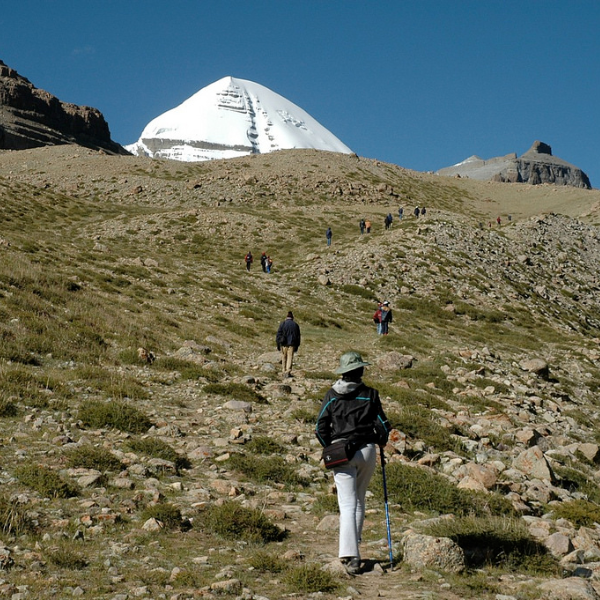
Exploring Ashtapad Tirth: The Nirvana Land of Bhagwan Rishabhdev

Activities Highlights



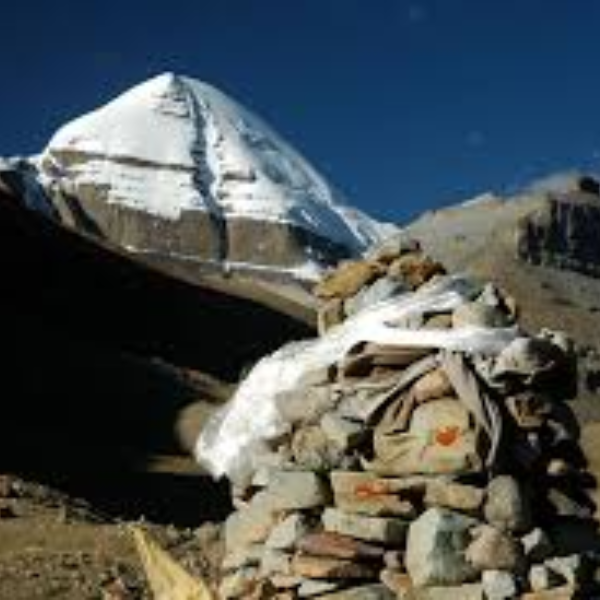
Nestled in the shadow of the majestic Mount Kailash lies a destination of unparalleled spiritual significance: Ashtapad Tirth. While Mount Kailash is globally revered as the heavenly abode of Lord Shiva, Ashtapad holds the distinction of being the most massively followed pious shrine for Jains—the sacred site where the first Jain Tirthankar, Bhagwan Rishabhdev (Adinatha) , attained Nirvana (salvation).
Carrying the literal meaning of “Eight Steps,” Ashtapad is not merely a mountain; it is a beguiling pilgrimage spot filled with abundant caves and natural beauty. For participants undertaking the holy Kailash Manasarovar Yatra, Ashtapad represents the ultimate satisfaction, both spiritually and historically.
Before You Read: Essential Context from Our Kailash Series
This blog is part of our complete Kailash Mansarovar pilgrimage guide. For a fuller understanding, we strongly recommend reading these two companion pieces that reveal the raw realities of this journey:
🔗 7 Realities of Kailash Mansarovar That Most Blogs Ignore – The uncomfortable truths about altitude, rescue, and survival.
🔗 9 Reasons Why Kailash Mansarovar Is Not Just Another Trek – Why this pilgrimage transcends ordinary adventure travel.
These links open in a new tab. Bookmark them before continuing your reading.
The Legend of the First Tirthankar
To understand Ashtapad Tirth, one must understand Rishabhanatha. Known as Ādinātha (“Adi” = First, “Natha” = Lord), he is a towering figure in Jainism Tirthas. According to texts, he existed millions of years ago, living for approximately 8,400,000 purva years with a height of 1,200 feet. Regarded as the god of civilization and the ultimate founder of Jainism, his presence dominates the region.
When Bhagwan Rishabhdev achieved Nirvana at this peak, his son, Chakravarti King Bharat (the ancestor of the Pandavas and Kauravas as per Hindu mythology), established a magnificent temple as a memorial. Legend states that this palace was constructed with crystal and gemstones—a fitting tribute to his father’s liberation.
For followers of Jainism Tirthas, no other site carries as much weight. Ashtapad is not merely a destination; it is the final earthly footprint of the first enlightened being of this era.
Geography: Eight Steps and Two Peaks
Located near Mount Kailash Ashtapad in Southwest China’s Sichuan Province (close to the Tibetan border), Ashtapad sits at a staggering elevation of approximately 4,900 meters (17,000 feet) . The name Ashtapad suggests that the ascent can be made in eight giant steps, or that the mountain comprises eight distinct peaks.
However, the site is visually dominated by two specific peaks, each offering endless, indescribable beauty:
1. Nandi Parvat
Before the valley turns northeast, a rock rises thousands of feet sheer from the valley floor. As Lama Govinda wrote in The Way of the White Clouds, it is “shaped like the sacred Nandi bull, with its head raised towards the summit of Kailas, as if looking lovingly at its master.”
2. Mount Kailash
The southern face of Mt. Kailash features the Meru Danda (spine) running through its middle, offering the most gorgeous view of the peak. From Ashtapad, pilgrims witness Kailash not as a distant deity but as a neighbor.
The Spiritual Convergence: Jainism, Hinduism, and Buddhism
Mount Kailash Ashtapad serves as a spiritual sheath for devotees from across the globe, acting as a lifeline for major Asian rivers and a center for three main religions. This convergence makes the region unique among all Jainism Tirthas.
| Religion | Significance at Ashtapad-Kailash Region |
|---|---|
| Jainism | Ashtapad is home to Sidhalay, a very auspicious place where one can reportedly see 200-foot-tall Digambar Jain statues carved into the mountain. It is the ultimate pilgrimage for those seeking purity and salvation. |
| Hinduism | On Nandi Parvat, there is a beautiful Hindu temple. On Mt. Kailash, there are additional temples cut directly from the mountain rock. Lord Shiva resides here. |
| Buddhism | The region retains its holy status as a celestial land. Buddhists believe Mount Kailash is the abode of Demchok (a wrathful deity). |
For a pilgrim visiting Mount Kailash Ashtapad, the experience is not sectarian. It is universal. You stand on ground where Jains revere liberation, Hindus worship creation, and Buddhists meditate on compassion.
The Pilgrimage: A Difficult Yet Fruitful Journey
Visiting Ashtapad Tirth is not easy. The weather conditions can be severe, and the tour is only open for three to four months of the year (May–June and September–October). Pilgrims must participate in the strenuous 52 km Parikrama (circumambulation) of Mount Kailash. While difficult, the results are meant to be immensely fruitful.
How to Reach Ashtapad Tirth:
Important: Ashtapad is not always accessible to standard Yatra groups. You must specifically request it through your tour operator. Many standard Kailash Mansarovar packages omit Ashtapad unless you ask.
A Note on Accessibility
There remains an aura of mystery regarding the exact location. Some documents suggest that experiments to pinpoint Ashtapad Tirth’s exact coordinates are still under progress. It is also noted that travelers often need to seek permission from the local Lamas to visit the Ashtapad Mountain.
Current Status (2024-2025):
-
Visible from distance: Yes, from certain points on the Kailash Kora
-
Physical access to the peak: Restricted. Most pilgrims view Ashtapad from a designated viewpoint near Dirapuk.
-
Full ascent to the Nirvana spot: Requires special permits and is rarely granted.
Despite these restrictions, even viewing Mount Kailash Ashtapad from afar is considered highly meritorious in Jainism Tirthas.
Why Ashtapad Matters Among Jainism Tirthas
To understand the importance of Ashtapad Tirth, compare it to other major Jainism Tirthas:
| Tirtha | Location | Significance |
|---|---|---|
| Shikharji (Parasnath) | Jharkhand, India | Nirvana of 20 Tirthankars |
| Dilwara Temples | Mount Abu, India | Architectural marvel, not a Nirvana site |
| Palitana | Gujarat, India | 863 temples, no Nirvana |
| Ashtapad Tirth | Near Mount Kailash, Tibet | Nirvana of the FIRST Tirthankar – Rishabhdev |
Among all Jainism Tirthas, Ashtapad holds the unique distinction of being the Adi Tirtha—the original pilgrimage site connected to the very first enlightened teacher of this cosmic era.
Final Reflections
Although Ashtapad is not as famous as the towering Kailash peak, it is equally important from a religious perspective and highly auspicious. If an individual gets the chance to see this place, they should feel truly lucky.
Whether you are a Jain looking to honor the memory of Rishabhdev, a Hindu seeking the grace of Shiva, or simply a traveler in awe of nature’s beauty, Mount Kailash Ashtapad offers a glimpse of the divine. The combination of endless beauty, historical significance, and deep Bhakti acts like a magnet—pulling pilgrims to the roof of the world for a salvation that few words can describe.
Plan your Yatra wisely, brace yourself for the altitude, and prepare for the spiritual journey of a lifetime.
Share This Guide
If you found this blog on Mount Kailash Ashtapad and Jainism Tirthas useful, please share it with fellow pilgrims. Understanding the sacred geography of Ashtapad Tirth transforms the Kailash Yatra from a mere trek into a profound spiritual homecoming.
Jai Jinendra. Har Har Mahadev. Om Mani Padme Hum.
Contact Mission Nepal Holidays for a sacred journey of legends.